 pedia
pediaThe phrase "glycerin-containing soap moisturizes" is frequently repeated across Turkish internet sources; yet most sources conflate two distinct scenarios: glycerin added externally to melt-and-pour (transparent) soap bases with glycerin naturally produced and retained during cold process production. This article aims to distinguish these two worlds, from reaction chemistry through industrial separation processes to how skin uses glycerin at the molecular level—all from a single chemist's perspective.
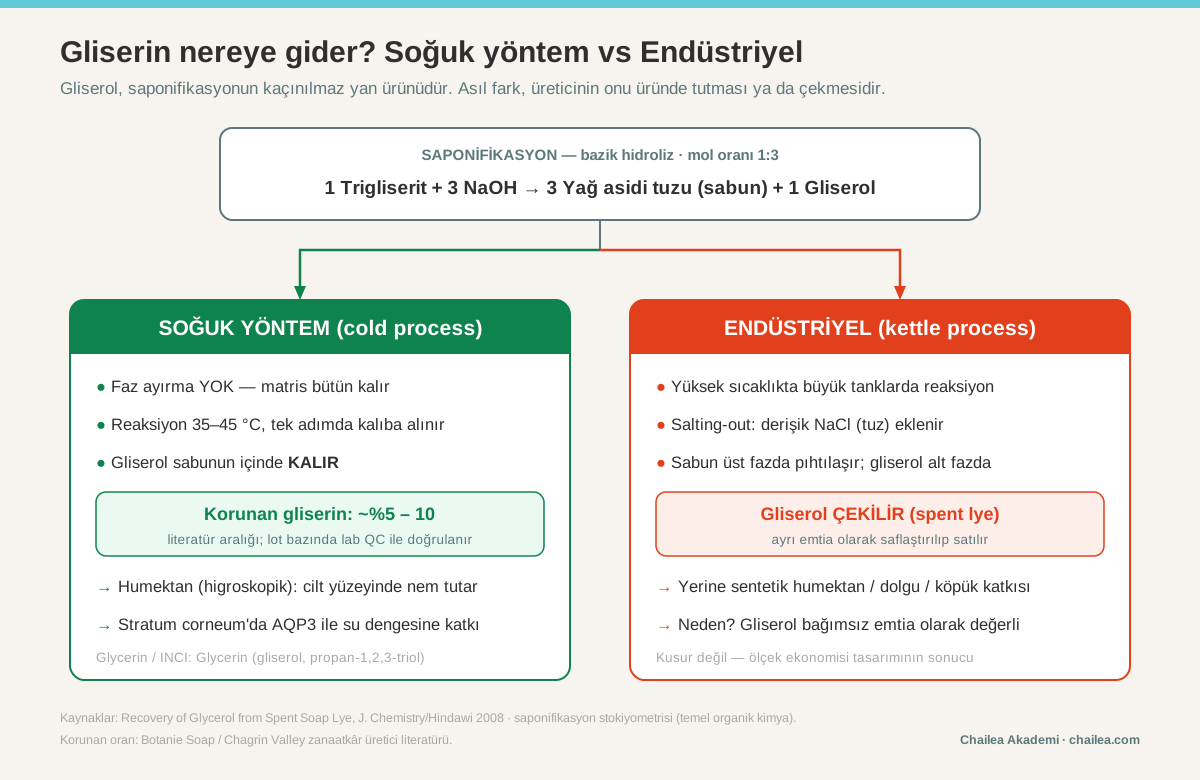
What is glycerin (Glycerin / INCI: Glycerin) and where does it come from in soap?
Glycerin, listed in INCI nomenclature as "Glycerin," chemically known as glycerol (propan-1,2,3-triol), is a three-hydroxy-group-bearing sugar alcohol. Its hygroscopic (water-attracting) nature makes it a cosmetic humectant, a moisture-retaining agent. Natural fats—such as olive oil (Olea europaea), coconut oil (Cocos nucifera), and palm oil (Elaeis guineensis)—have glycerol as the molecular backbone of their triglycerides; three fatty acids are esterified to this glycerol spine.
Saponification chemistry: stoichiometry 1 triglyceride + 3 alkali → 1 glycerol + 3 fatty acid salt
Soap production, in chemical literature known as saponification, is a basic hydrolysis reaction. The triglyceride molecule, in aqueous solution with sodium hydroxide (NaOH; for bar soap) or potassium hydroxide (KOH; for liquid soap), undergoes reaction and the ester bonds cleave. The molar ratio is 1:3:
1 triglyceride + 3 NaOH → 1 glycerol + 3 sodium fatty acid salt (soap)
That is, each soapified triglyceride molecule, by chemical necessity, releases the glycerol spine from its structure (Wikipedia, Saponification article; this equation is fundamental organic chemistry textbook material). Whether glycerol is present in soap is not a matter of recipe; it is the inescapable outcome of the reaction. The real question is: does the producer keep this glycerol in the product, or extract it in a separate step?
The difference between "added glycerin" and "naturally produced glycerin"
The conflation of these two concepts is a frequent source of terminological confusion in Turkish soap labeling:
- Added glycerin (melt-and-pour / transparent glycerin soap): Industrially produced soap "noodles" or bases—in which glycerol has already been separated—are melted; externally purified glycerin, sugar, alcohol, and other transparentizers are blended in to achieve the characteristic transparent appearance. Here, glycerin is an additive.
- Naturally produced and retained glycerin (cold process): The reaction occurs at low temperature (typically 35–45 °C) in a single step; saponification products (soap + glycerol) are not separated, remaining together and poured into a mold for weeks-long curing and maturation. Here, glycerin is a component the reaction itself generates, not added.
This micro-distinction demolishes the notion that "all glycerin-containing soaps are the same": melt-and-pour soap may have high glycerin but its base matrix is already industrially processed soap; in cold process, both the retained glycerin and the fatty acid profile reflect the recipe's unique oil composition.
Why does glycerin remain in soap made by the cold process?
Cold process, as its name suggests, involves no external heat source to evaporate water or separate phases. The reaction, following the emulsified trace stage, unfolds under its own exothermic (heat-releasing) course in the mold. When saponification is complete, the homogeneous matrix contains fatty acid salts (the actual soap component), glycerol released from the reaction, any unreacted fat (called superfat if excess oil was used), and water from the formulation.
There is no step in this matrix to remove glycerol—no salt addition, phase separation, or rinsing. As a result, glycerin persists in the final product and contacts the skin surface in the same chemical structure during cleansing.
Reported retained glycerin levels in literature
In soap production literature, because cold process does not remove glycerol, the minimum glycerin content of a cold-process soap is reported as roughly ~%5, with artisanal producer technical sources commonly citing a ~%8–10 range (Botanie Soap technical blog; Chagrin Valley and similar craft producer literature). This range varies depending on the fatty acid profile of the oils used, the water ratio in the formulation, and controlled water loss during curing. The formulations applied at Chailea atelier fall within this literature range; before a specific batch value is disclosed, it is verified against in-house QC lab data.
This number alone is not a marketing claim; it is a mechanistic output. What matters is that glycerin released from the reaction persists in the structure unchanged; the decimal precision of the ratio requires lab analysis for each batch.
Why and how is glycerin removed in industrial soap?
In large-scale soap factories, the reaction is conducted in large tanks at elevated temperature, a method called "kettle process." When saponification completes, the matrix is still a soap + glycerol + water + salt mixture. At this point, the producer applies a phase-separation step to market glycerol as a separate commodity: salting-out (salt-driven separation).
Salting-out mechanism
Concentrated sodium chloride (NaCl) solution is added to the reaction medium. Soap molecules (sodium fatty acid salts) lose solubility in the aqueous phase as ionic strength increases and precipitate in the upper phase. Polar glycerol, by contrast, remains dissolved in the lower "spent lye" phase; recovery of glycerol from this lye is described in peer-reviewed literature (Recovery of Glycerol from Spent Soap Lye By-Product of Soap Manufacture—Journal of Chemistry / Hindawi, 2008). This lower phase is then concentrated and purified, after which glycerol is sold as a separate commodity for use in pharmaceuticals, food, cosmetics, or industrial resins.
Why is it removed?
The answer is largely economic. Glycerol, as an independent commodity, carries significant added value; leaving it in an inexpensive, bulk-market soap represents lost opportunity cost for the producer. The industrial producer finds it economical to extract glycerol, sell it separately, and instead add synthetic humectants, fillers, or foam boosters. This is not a flaw in modern industrial soap—it is the natural outcome of scale-economy design; the mechanism explaining the absence of glycerin from the end product is, however, this very separation. The importance of comparative INCI reading and label-based consumer differentiation criteria between natural soap and market soap solidifies this distinction on the consumer side.
The mechanism by which glycerin protects skin moisture (humectant action)
The phrase that "glycerin retains moisture" has a concrete basis in skin biology. The mechanism is two-tiered.
Hygroscopic water attraction and stratum corneum reservoir effect
Glycerol, bearing three hydroxyl groups, draws water molecules from its surrounding environment via hydrogen bonds. The topmost skin layer, the stratum corneum (horny layer), is organized in a brick-mortar model of corneocytes and lipids; glycerin applied to it adheres to this layer and creates a kind of "water reservoir," slowing transepidermal water loss.
Concentration matters by dose: Chen et al., in a 2022 Scientific Reports (Nature portfolio) paper titled Moisture retention of glycerin solutions with various concentrations: a comparative study, report that glycerin solution moisture-retention capacity increases between %0 and %60 weight ratio, shows no weight change in evaporation at %60–70, and above %70 the solution begins absorbing moisture from the environment. That is, glycerin is not simply "the more the better"; there is a dose-dependent balance curve.
AQP3 (aquaporin-3): glycerol's entry gate into the epidermis
Glycerin's role in skin hydration has also been illuminated at the molecular biology level over the past two decades. Aquaporin-3 (AQP3), a channel protein in keratinocyte cell membranes, carries both water and glycerol. In a Journal of Biological Chemistry 2002 publication, Selectively Reduced Glycerol in Skin of Aquaporin-3-deficient Mice May Account for Impaired Skin Hydration, Elasticity, and Barrier Recovery by Hara, Ma, and Verkman (DOI: 10.1016/S0021-9258(19)33277-6), aquaporin-3-knockout mice showed roughly %50 reduction in stratum corneum water content and impaired epidermal glycerol transport. Restoration of this deficit by glycerol administration is in vivo proof of the glycerin humectant effect. (These findings rest on rodent models; they demonstrate mechanism but do not directly generalize to human topical use.)
Subsequent research has reinforced AQP3's central role in skin physiology. Hara and Verkman's PNAS 2003 publication, Glycerol replacement corrects defective skin hydration, elasticity, and barrier function in aquaporin-3-deficient mice (DOI: 10.1073/pnas.1230416100), demonstrated that skin hydration, elasticity, and barrier function deficits arising from AQP3 knockout could be corrected by systemic glycerol supplementation. A more recent review, published in MDPI Cosmetics in 2025, titled Aquaporins in the Skin: Molecular Regulators of Hydration and Potential Targets for Cosmetic Applications, synthesizes AQP3's central role in keratinoid glycerol carriage and hydration, and that glycerol delivery to surface epidermis contributes both "reservoir effect" and sustained hydration. A mechanistic 2025 review by Fluhr et al. in International Journal of Dermatology, Restoring Skin Hydration and Barrier Function: Mechanistic Insights Into Basic Emollients…, further details basic emollients like glycerin's mechanistic contribution to stratum corneum hydration and barrier function within the cosmetic humectant context.
Alongside glycerin, the incorporation of humectant molecules like honey (Honey) into formulations, and the detailed saponification behavior of base oils such as olive oil (Olea europaea) owing to its high oleic acid profile, are evaluated within the broader moisture-retention strategy of natural soap makers. The five-millennia monograph of olive oil (Olea europaea) as a soap-making ingredient represents reference-standard sourcing.
Safety and regulatory framework
Glycerin's use in cosmetics has been assessed by international safety panels. The Cosmetic Ingredient Review (CIR) Expert Panel's 2014 Safety Assessment of Glycerin as Used in Cosmetics, Final Report and a 2019 contemporary assessment by Becker et al. published in International Journal of Toxicology (Safety Assessment of Glycerin as Used in Cosmetics, DOI: 10.1177/1091581819883820) report glycerin safe under concentration and application conditions typical of use. The same 2019 report notes that, according to FDA Voluntary Cosmetic Registration Program (VCRP) 2014 data, glycerin was reported in 15,654 cosmetic products and stands as the third most-reported ingredient after water and fragrance.
Within cosmetic regulation, glycerin appears neither on international restricted lists nor among prohibited substances in Turkey's Cosmetic Regulations. Glycerin retained in natural soap is declared under the same INCI name; it requires no separate label category. The detailed contrast between cold-process retention and kettle-process removal of glycerin in production method guides frames this process distinction; for a more comprehensive definitional framework, references to what natural soap is, its composition, and regulations can be consulted.
Frequently Asked Questions
Is "glycerin soap" the same as cold-process natural soap?
No. Products marketed as "glycerin soap" are mostly melt-and-pour (transparent) soap bases—industrially manufactured, with glycerol already removed, and then glycerin added externally during production. Cold-process (cold process) soap has glycerin produced naturally during the reaction and never separated, so it remains in the product structure. Both contain "glycerin" in their names but differ in mechanism, source, and matrix chemistry. For a foundational conceptual framework on what cold process is, the cold process soap monograph and cold-process soap-making guide serve as detailed starting points.
How much glycerin does natural soap contain?
Literature reports that, when unremoved, it is present at a minimum of roughly ~%5; common formulation sources cite a ~%8–10 range. The exact ratio depends on the fatty acid profile of oils used (for instance, high-oleic-content base oils versus high-lauric-content fats yield different proportions), the water ratio in the formulation, and curing duration. For a specific batch, only in-house lab QC analysis can confirm the precise value.
Where does glycerin recovered from industrial soap go?
Glycerin recovered from spent lye and purified through separation steps becomes an independent commodity used across a broad spectrum: from pharmaceutical formulations to toothpaste and moisturizers, from food additives to industrial resins. The "absence" of glycerin in industrial soap is thus not oversight but an economic design choice.
Does glycerin make soap "sweat" or absorb moisture?
High-glycerin melt-and-pour soaps accumulating water droplets on their surface in humid environments (the "glycerin dew" / glycerin sweat phenomenon) is well documented. Cold-process soap contains much lower glycerin levels and differs in matrix structure; this sweating is far more limited. Nonetheless, storing natural soap in a well-ventilated, dry environment and draining water after use remain best practices for shelf life in any case.
Is glycerin suitable for all skin types?
Glycerin is considered safe by CIR under standard use conditions and appears in over 15,000 cosmetic products. In dry and normal skin, it is often preferred for moisture support; in oily or combination skin, it also shows acceptable tolerance at standard use concentrations. As with any cosmetic product, a small patch test behind the ear and observation of tolerance before regular use is a reasonable approach if individual sensitivity is a concern.
References
- Wikipedia — Saponification (foundational saponification stoichiometry from textbooks): https://en.wikipedia.org/wiki/Saponification
- Recovery of Glycerol from Spent Soap Lye By-Product of Soap Manufacture — Hindawi / Journal of Chemistry, 2008 (peer-reviewed): https://downloads.hindawi.com/journals/chem/2008/302609.pdf
- Marmara Tuz — The Impact of Salt on Process Efficiency and Product Quality in Soap Manufacturing (industry source, salting-out process description): https://marmaratuz.com/en/the-impact-of-salt-on-process-and-product-quality-in-soap-manufacturing/
- Chen et al. — Moisture retention of glycerin solutions with various concentrations: a comparative study, Scientific Reports (Nature portfolio), 2022: https://www.nature.com/articles/s41598-022-13452-2
- Hara M, Ma T, Verkman AS — Selectively Reduced Glycerol in Skin of Aquaporin-3-deficient Mice May Account for Impaired Skin Hydration, Elasticity, and Barrier Recovery, Journal of Biological Chemistry, 2002, DOI: 10.1016/S0021-9258(19)33277-6: https://www.jbc.org/article/S0021-9258(19)33277-6/fulltext
- Hara M, Verkman AS — Glycerol replacement corrects defective skin hydration, elasticity, and barrier function in aquaporin-3-deficient mice, PNAS, 2003, DOI: 10.1073/pnas.1230416100: https://www.pnas.org/doi/10.1073/pnas.1230416100
- Aquaporins in the Skin: Molecular Regulators of Hydration and Potential Targets for Cosmetic Applications, MDPI Cosmetics, 2025: https://www.mdpi.com/2079-9284/12/6/263
- Fluhr et al. — Restoring Skin Hydration and Barrier Function: Mechanistic Insights Into Basic Emollients for Xerosis Cutis, International Journal of Dermatology (Wiley), 2025: https://onlinelibrary.wiley.com/doi/10.1111/ijd.17790
- CIR — Safety Assessment of Glycerin as Used in Cosmetics, Final Report, 2014: https://www.cir-safety.org/sites/default/files/glycer_122014_FR.pdf
- Becker et al. — Safety Assessment of Glycerin as Used in Cosmetics, International Journal of Toxicology (SAGE), 2019, DOI: 10.1177/1091581819883820: https://journals.sagepub.com/doi/10.1177/1091581819883820
- Botanie Soap — Glycerin Soap: Everything You Need to Know (terminology and production distinction context): https://botaniesoap.com/blogs/misc/glycerin-soap